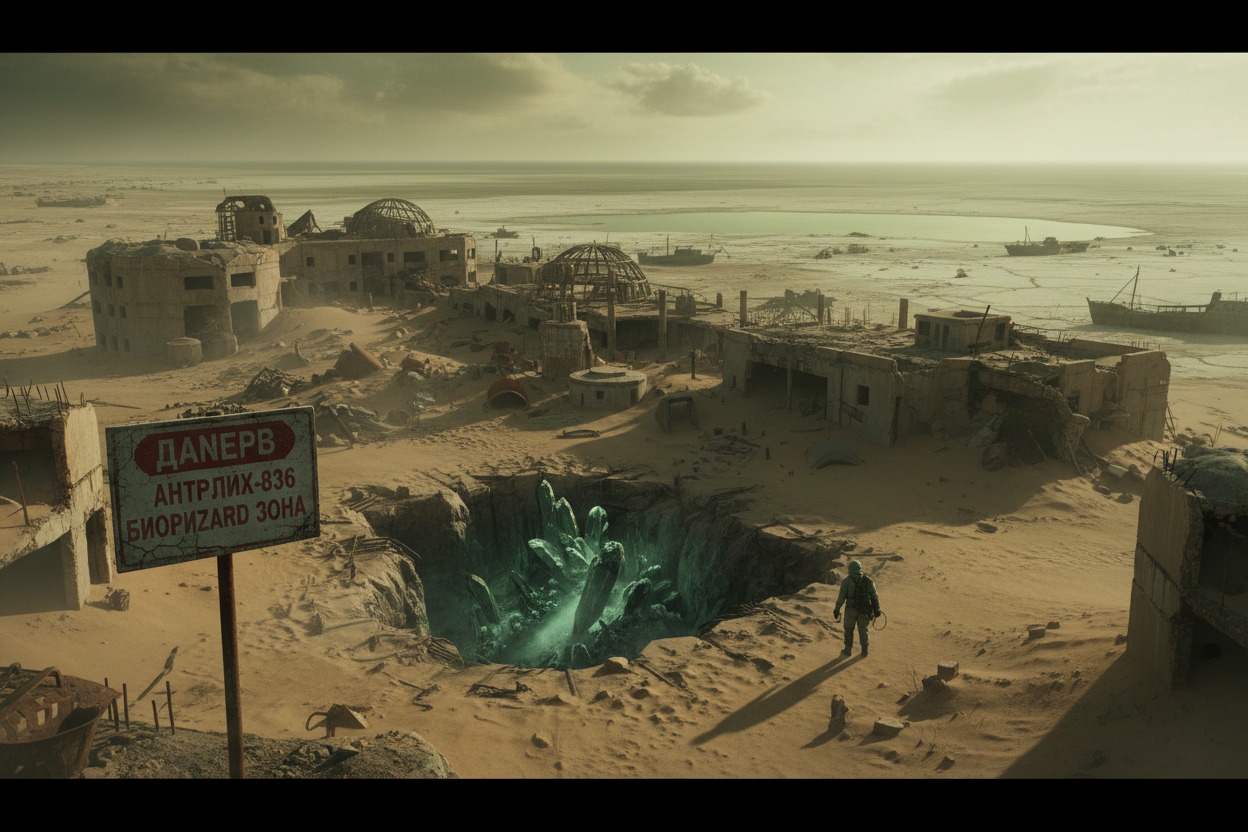
What happens when the world’s deadliest bacteria is left to linger, untended, in the ruins of a crumbling fortress on a forgotten island? Beneath the desolate sands of Vozrozhdeniya—“Rebirth Island”—lies an unsettling legacy: a Soviet bio-weapons lab where the specter of Anthrax-836 remains dormant, potent, and ready to awaken. As the waterline of the Aral Sea recedes, exposing ground once thought unreachable, we are forced to confront a haunting question: What hidden dangers still fester beneath those shifting, toxic sands?
The Island that Time and the Soviets Tried to Forget
In the shadow of the Cold War, secrecy was both weapon and shield. Vozrozhdeniya was chosen for its isolation—an island virtually marooned in the middle of the vast Aral Sea, accessible only to select Soviet personnel. Beginning in the 1940s, the USSR transformed this barren land into a bio-weapons testing site, a key part of the infamous Biopreparat program.
Inside heavily secured underground bunkers, scientists engineered weaponized pathogens, including the infamous Anthrax-836 strain. Designed for resilience and lethality, Anthrax-836 could survive searing heat, relentless cold, and the passage of decades. The island became ground zero for tests intended to weaponize nature’s most unforgiving killers.
But by the late 1980s, as the Soviet Union’s grip weakened, plans unraveled—and legends of Vozrozhdeniya’s horrors began to seep into the wider world.
Operation Concealment: A Frantic and Flawed Burial
The year 1988 marked a turning point. Fearing Western inspection and desperate to cover up decades of illicit research, Soviet officials ordered a hurried burial of toxic stockpiles. Hundreds of tons of anthrax slurry were poured into trenches, hastily doused with chemicals, and sealed beneath layers of concrete and earth.
Soldiers and scientists worked around the clock, racing against geopolitical tension and ecological disaster. The operation was as secretive as it was rushed, and those involved later admitted the methods were flawed. Anthrax spores, uniquely resilient, weren’t just buried—they were preserved.
Testimonies from insiders, including declassified interviews and eyewitness accounts, offer chilling snapshots: crates stenciled with warning signs, clouds of powder in the baking sun, and a lingering awareness that these microbes were not truly destroyed—just hidden.
The Aral Sea’s Retreat: Exposing a Biological Time Bomb
Vozrozhdeniya’s tragic irony: just as the Cold War thawed, the Aral Sea itself began to vanish. Decades of disastrous Soviet irrigation schemes drained the sea, transforming the once-remote island into a land bridge—a toxic wasteland now accessible by foot.
As the sands swallowed the old bunkers and burial sites, nomads, scientists, and scavengers wandered across the exposed seabed. Some developed mysterious illnesses; in rare but documented cases, soil samples revealed lingering anthrax contamination. In 2002, a multi-million dollar decontamination mission led by international teams sought to neutralize the most accessible threat. Yet even now, experts warn that vast quantities may remain, inaccessible and lethal, deep beneath the concrete and sand.
The story of Vozrozhdeniya’s contamination is not merely one of environmental tragedy—it is a lingering hazard, a literal buried weapon that could re-emerge with shifting winds and rising global temperatures.
Eyewitness to the Wasteland: Firsthand Accounts
Few outsiders have entered Vozrozhdeniya’s decaying labyrinth since the USSR’s fall. Dr. Brian Hayes, an American researcher, joined a post-abandonment science mission and documented a scene worthy of post-apocalyptic fiction:
“We moved past salt-crusted walls and shattered equipment. Warning labels in Cyrillic flaked off rusted drums. In the containment halls, the chemical stench was overpowering. Sealed canisters sat alongside evidence of hasty evacuation—torn protective suits, half-packed lockers, notes scrawled in panic. The silence was ceaseless, broken only by the wind.”
Local lore deepens the sense of unease: tales of camels dying unexplained deaths, scavengers vanishing without trace, and secretive government patrols. Whether all true or not, these stories add to the aura of dread—and to the urgency of monitoring this residual threat.
Lessons for Today: Biosecurity and the Dangers of Neglect
Vozrozhdeniya is a cautionary symbol—an extreme example of what happens when research outpaces ethics, and secrecy trumps safety. Across the globe, aging storehouses of dangerous pathogens sit neglected and poorly cataloged. Climate change accelerates risks: in 2016, thawing permafrost in Siberia released anthrax from century-old reindeer carcasses, resulting in fatalities and renewed fears.
What can be learned—and done—now? A few actionable steps:
- Support Ongoing Cleanup: Continued pressure for comprehensive bioweapons site remediation is essential. Funding and transparency must follow international guidelines.
- Push for Transparency: Secrecy allowed Vozrozhdeniya to fester. Open records and public oversight are crucial for all legacy weapons sites.
- Stay Informed and Engaged: History does not stay buried. Whether you are a researcher, student, or traveler, understanding these hidden dangers is vital for community safety.
- Advocate for Responsible Research: Today’s scientists and policymakers must embrace biosecurity and ethical oversight to prevent new disasters.
For readers interested in Cold War history, vigilantly following the legacy of places like Vozrozhdeniya isn’t just an academic exercise—it’s a vital, ongoing responsibility.
Conclusion: Rebirth Island’s Enduring Shadow
Vozrozhdeniya stands as a chilling monument to the dangers of unchecked ambition and forgotten secrets. The legacy of Anthrax-836 leaching into the parched seabed is more than a cautionary tale—it’s a real and present threat, awaiting only a change in wind, water, or human curiosity to reawaken.
As we peer into this abyss of Cold War history, we must remember: what is buried is not always gone, and the lessons of Vozrozhdeniya echo louder each day.
Ready to Discover More Hidden Histories?
The story of Vozrozhdeniya is just one of many secrets lurking in the shadows of the past. If you’re intrigued by true stories of Cold War secrets, government cover-ups, or forgotten disasters, visit TheDarknessFallsStories.com for exclusive deep dives and compelling narratives. Subscribe for updates, join our community, and share your thoughts—because when we shine a light on history’s dark corners, we arm ourselves against repeating its mistakes.
Leave a Reply